

The unfortunate thing is that most people have no idea their shoes are actively deforming their feet. Slowly over time the foot begins to adapt to the shape of the shoe without you even realizing it. This happens with almost every “popular” shoe brand in the world (Nike, Adidas, New Balance, Asics, Sketchers, etc.).

This is part 3 of a series titled “Foot Pain (How To Fix ‘Plantar Fasciitis’ and Other Common Foot Problems)”
Part 1: Introduction
Part 2: Foot Anatomy 101 (Normal Vs Natural)
Part 3: How Shoes Change Your Foot
Part 4: What Causes Plantar Fasciitis?
Part 5: How To Screen Your Foot Pain
Part 6: Foot Pain – The Rebuilding Process
Part 7: Foot Pain – Should You Wear Orthotics?
Part 8: Foot Pain – What About Steroid Shots? – Coming Soon…
Decades ago, a podiatrist by the name of William Rossi started to write on the harmful effects of modern shoe design on the structure and function of the foot. His monumental article “Why Shoes Make ‘Normal’ Gait Impossible” outlined the problems associated with many of the shoes we wear (I would highly suggest reading this article if you have time).1 Of the many variables that modify your foot structure and function, the three most problematic are:
- Tapering Toebox
- Toe Spring
- Elevated Heel
Toebox
If you were to look closely at the wide range of shoes produced today (from the smallest shoes made for little babies to full adult sizes) you would likely notice a glaring problem. When you examine most baby shoes, they are shaped like baby feet (they are super wide at the ends of the toes). The manufactures are clearly trying to create a shoe that fits the child’s anatomy. However, around the age of three to four the shape of the most shoes begin to change. All of a sudden, these shoes become narrower and slender no longer resembling a natural foot. This is when the problem starts.
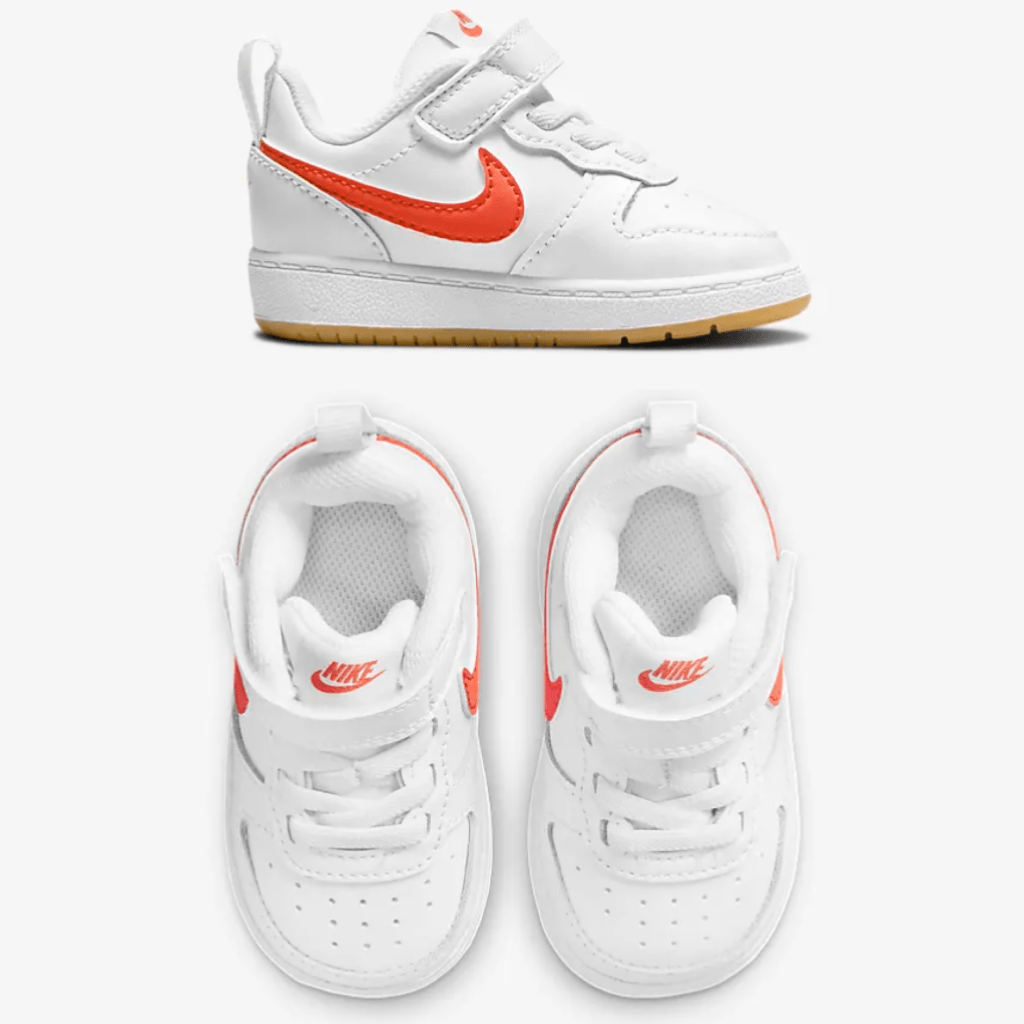

The part of the shoe that many shoe companies alter around this time is called the “toebox.” This describes the front section of the shoe that simply encapsulates the toes. Most shoes manufactured today unfortunately are made with a very narrow toebox that cram and pinch your toes together. Take a look at your shoes right now. There’s a good chance most (if not all) of the shoes you wear come to a point.

The thing most shoe companies won’t tell you is that they knowingly make this part of the shoe too small for a reason. This design feature has absolutely nothing to do with helping your foot function optimally (if so, they would just make larger versions of their wide baby shoes) but rather has everything to do with the fashion.
These standards are not new or original to the 21st century either. In fact, there are records of narrow tipped shoes being associated with higher socioeconomic status for centuries!2,3 By the 17th century if you were a part of the wealthy elite, you wore shoes with pointed toes to show-off your sense of high fashion. On the other hand, those in the “lower class” wore footwear they could afford (usually made of leather or wool) and often shaped with a very wide toebox.
Fashion culture has almost always deemed a wide foot to be that of the “working class” and the narrow shape for the wealthy aristocracy. It should be of no surprise that this long-established custom has made its way into how we design almost every shoe imaginable today, even athletic shoes.
When it comes to athletic footwear, many of us have been taught to find shoes that have a “snug fit” based on the idea the foot needs more support. However, when it comes to the toes, this notion couldn’t be further from the truth. A narrow fitting toe box hinders the natural and desirable expansion of the foot (called toe splay) that should happen when weightbearing. Without toe splay the foot cannot functional naturally within the shoe and provide optimal stability for the rest of the body. This constriction leads to movement compensations with walking, running and lifting tasks like squatting or deadlifting.
A narrow toebox also increases risk for developing painful deformities like bunions.4-7 If you look down at your feet, your big toe should ideally be directly in line with your first metatarsal bone (the long bone just above the inner arch of your foot). While a bunion appears to be excessive bone growth on inside base to the toe, it is technically an adaptive subluxation of the joint. It’s not hereditary as some will believe but rather directly related to long-term wearing of shoes that are too narrow in the toebox.

Toe Spring
Your foot was designed to have all of your toes completely flat on the ground when weightbearing. Because 18 of the foot’s 19 tendons are attached to the toes, allowing them to remain flat essentially anchors your entire foot to the ground and enhances stability. When standing, squatting or deadlifting, having your toes flat on the ground allows the toes to grasp the ground and provide stability for the entire foot and therefore the rest of the body. When walking/running, your toes are meant to grasp the ground as the rest of the foot then bends forward over the “ball of the foot.”
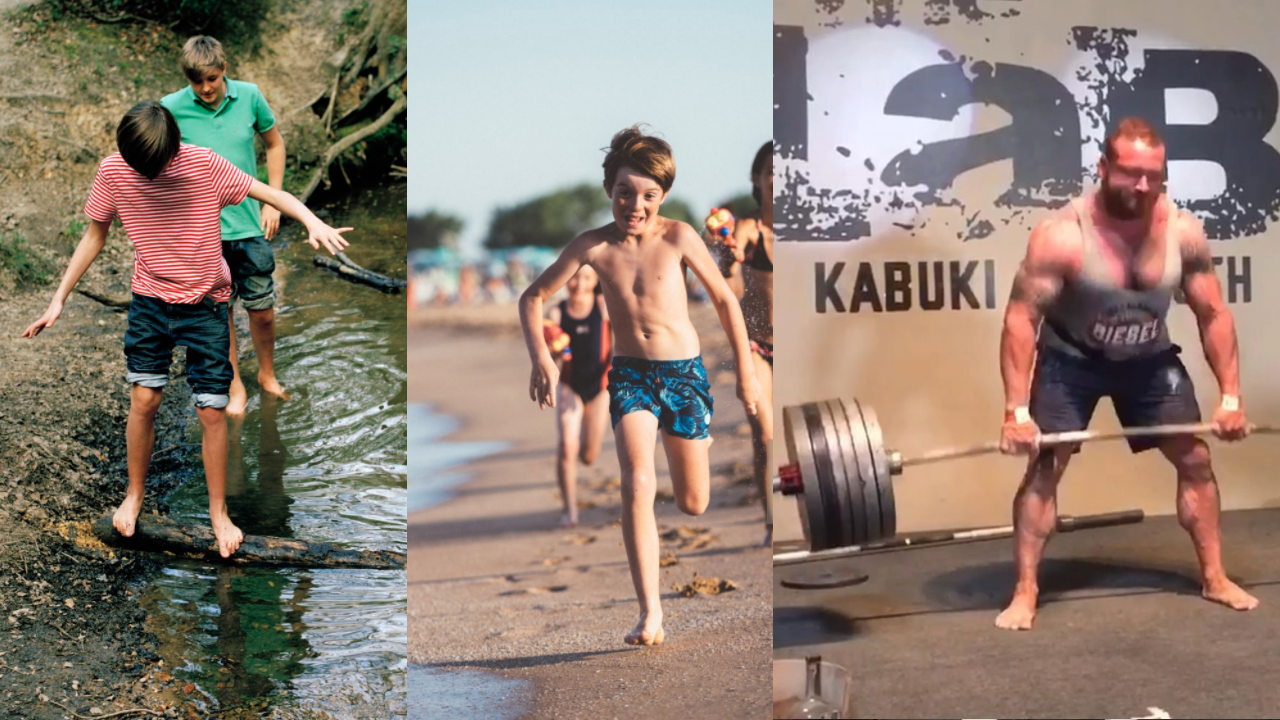
Unfortunately, years ago shoe manufacturers began to construct shoes that completely disregarded this need. If you closely examine many of your shoes, the front tip will often be elevated off the ground a few degrees. This featured called “toe spring” was originally built into thick and inflexible shoes as a way to help “roll” the foot forward while walking. Think about this as having the bottom of a rocking chair on your foot.
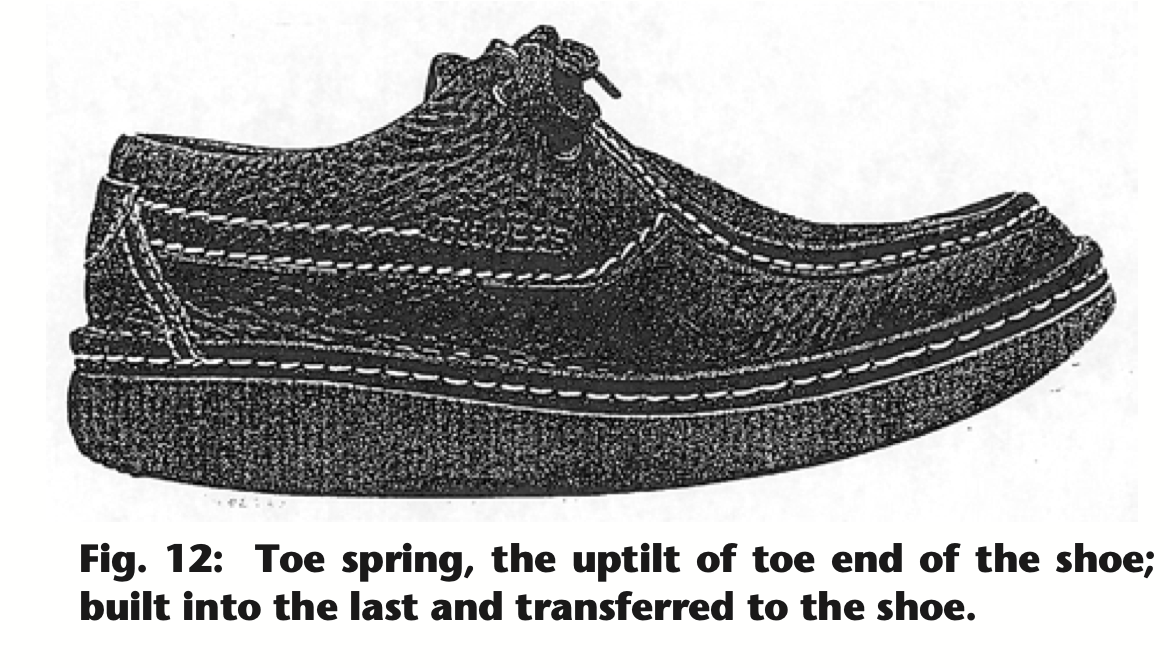
You see, when manufacturers began creating shoes with thicker soles they realized you couldn’t walk “normally” with them on. So, rather than clomp around all day like you’re going for a hike up a snow mountainside in snow shoes, they added a slight up-tilt to the front of the shoe. Suddenly you could walk with a more “normal’ gait pattern as your foot rolled forward from heel to toe.
So why is this a problem?
Dr. Rossi simply explained that toe spring forces the toes of your foot “out of business.” When you unnaturally elevate the toes from the ground they can no longer function optimally within the shoe. Over time this limited stimulation to the smaller muscles within the foot that controls the toes can lead to weakness and atrophy.8

Toe spring also creates an imbalance between the muscles and tendons that run on the top and bottom of the foot. By artificially elevating the toes from the ground day after day, month after month and year after year, the tendons on the top of the foot are constantly held in a shortened position. Over time this imbalance increases risk for deformity/injury called “hammertoes” that can create pain in the toes and ball of the foot.
Elevated Heel
When most in the strength world think of an elevated heel, they instantly envision the classic weightlifting shoe. This style of shoe was developed for the sport of Olympic weightlifting to help athletes achieve more biomechanically efficient positions when performing the snatch and clean lifts. By elevating the heel from the ground a few centimeters, the lifter is able to squat deeper with a more upright trunk thus allowing for bigger weights to be lifted with greater efficiency. While this sport specific shoe modification is helpful when performing the Olympic lifts, the long-term use of a heeled shoe in other lifts and throughout your day outside of the gym can have many negative consequences.9


The most detrimental effect of chronic heel elevation is adaptive shortening of the Achilles tendon and calf muscles! Your muscles/tendons are highly malleable and can adapt positively or negatively to forces placed on them over time. For example, in 2010 a group of researchers found that women who wore heeled dress shoes at least five days a week had significantly shortener calf muscle fibers compared to those who commonly wore flat sole shoes.10 When the heel is constantly elevated throughout the day the calf muscles are forced to always function in a shortened position. Over time the body negatively adapts by reducing the flexibility of the calf muscles and therefore decreasing the ankle’s available range of motion. Simply put, if you don’t use it, you lose it.
Now many of you may be thinking, “But I don’t wear high heel shoes” or “I only wear my weightlifting shoes for an hour at the gym, this can’t be a problem I face!”
What you may not realize is that heel elevation is not just found in weightlifting shoes and high heel stilettos! In fact, a large majority of the shoes produced today have a small cushioned heel built directly into the bottom! Shoe companies describe the amount of heel lift a shoe has as the “heel-to-toe drop” (the height difference between the heel and forefoot).

While the amount of heel drop can vary, many of the running & training shoes from Nike, Adidas, New Balance and Brooks have a heel drop of 10-12mm (for comparison purposes the high heel of a weightlifting shoe commonly has a 20mm drop). Even though the lower heel height of a running shoe isn’t nearly as intense as walking around in a pair of stilettos all day, your calf muscles/tendons are still being held in a shortened position. Routinely wearing shoes with a heel of any height day in and day out leads to eventual adaptive tightening of these tissues and restrictions in ankle mobility.
This is one big reason why ankle mobility limitations are so common. Many fail to find long-term progress in improving mobility in this area despite their best efforts. Stretching and mobilizing will never lead to significant changes if the body is put right back into a shortened position the moment you leave the gym and go back to wearing “normal” heeled shoes. While a heeled shoe may be necessary for certain sports such as Olympic weightlifting or even desirable by some when getting “dressed up” on occasion for a fancy dinner/party, the only way to regain flexibility of the calf muscles and return the body to its prior natural function is to habitually wear a shoe without any heel elevation.
Despite the millions of dollars spent in research and design of shoes today, the large majority of those produced are surprisingly not meant to fit a “natural” foot but rather fit your foot to what these companies deem as “normal.” It’s not about what helps your foot but rather what “looks good” and what will sell. By favoring fashion over function, we have been led down a path with numerous negative consequences to the foot andthe rest of the body as you’ll come to eventually find out.
Next week we’ll go over some of the most common types of foot injuries.
Until then,

Dr. Aaron Horschig, PT, DPT, CSCS, USAW

Dr. Kevin Sonthana, PT, DPT, CSCS
References:
- Rossi W. Why shoes make “normal” gait impossible. Podiatry Management. 1999:5-61
- Mafart B. Hallux valgus in a historical French population: paleopathological study of 605 first metatarsal bones. Joint Bone Spine. 2007 Mar;74(2):166-70.
- Dittmar JM, Mitchell PD, Cessford C, Inskip SA, Robb JE. Fancy shoes and painful feet: hallux valgus and fracture risk in medieval Cambridge, England. International Journal of Paleopathology. 2021. https://doi.org/10.1016/j.ijpp.2021.04.012
- Shine IB. Incidence of hallux valgus in partially shoe-wearing community. Br Med J. 1965;1(5451):1648-50.
- BARNETT CH. The normal orientation of the human hallux and the effect of footwear. J Anat. 1962;96(Pt 4):489-494.
- Kato T, Watanabe S. The etiology of hallux valgus in Japan. Clin Orthop Relat Res. 1981 Jun;(157):78-81.
- Al-Abdulwahab SS, Al-Dosry RD. Hallux valgus and preferred shoe types among young healthy Saudi Arabian females. Ann Saudi Med. 2000 May-July;20(3-4):319-21.
- Sichting F, Holowka NB, Hansen OB, Lieberman DE. Effect of the upward curvature of toe springs on walking biomechanics in humans. Sci Rep. 2020 Sep 17;10(1):14643.
- Cronin NJ, Barrett RS, Carty CP. Long-term use of high-heeled shoes alters the neuromechanics of human walking. J Appl Physiol (1985). 2012 Mar;112(6):1054-8.
- Csapo R, Maganaris CN, Seynnes OR, Narici MV. On muscle, tendon and high heels. J Exp Biol. 2010 Aug 1;213(Pt 15):2582-8.

You sprunki a bit of wisdom into my day, and now I feel equipped to tackle any challenge that comes my way
The online entertainment industry is evolving rapidly, making it harder to find a platform that truly meets individual expectations. I always seek services that offer both reliability and variety, and king567 turned out to be exactly that. Through king567 review, I explored interactive features, secure transaction methods, and exclusive offers designed for different preferences. This combination allowed me to enjoy a smooth experience with complete trust in every interaction.
I find your blog very informative. Thank you
The article’s layout was incredibly effective. The structured format ensured that each key point was easy to understand and remember.
It is a cryptocurrency software that uses artificial intelligence to set up and execute cryptocurrency trades. The robot system makes it a reliable software as it reduces the risk of losing money by scanning different websites and providing you with only the best deals. instant +x2 flarex
Gonna have to rethink my shoe game now. Maybe time for some wider toe boxes, haha.
Been there! My feet scream after long sessions, especially since I’ve been hooked on Drift Boss lately. That game demands laser focus and quick reflexes. Comfort is key when you’re chasing high scores and mastering those crazy turns. Seriously thinking of investing in some new footwear that won’t cramp my style (or my toes) while I’m trying to be the Drift Boss champion.
I found it interesting how the article briefly mentioned AI-driven cryptocurrency trading bots in the comments—funny how AI pops up everywhere now, even under squat technique discussions. Speaking of which, I recently came across a tool that checks whether a text is AI-written or not. It’s not perfect, but kind of fascinating to play around with, especially with all the AI-generated content floating around these days. Visit now
I recently read an interesting article on how different shoes actually change your feet over time, which made me rethink my usual footwear choices. With so many brands out there, I decided to check Rainbow Shops reviews to see if their shoes balance style with comfort. Turns out, quite a few people shared positive experiences about the fit and durability, especially for budget-friendly options.
I recently read an interesting article on how different shoes actually change your feet over time, which made me rethink my usual footwear choices. With so many brands out there, I decided to check Rainbow Shops reviews to see if their shoes balance style with comfort. Turns out, quite a few people shared positive experiences about the fit and durability, especially for budget-friendly options.
Wearing the wrong shoes can alter your posture, affect foot shape, and cause long-term issues. Just like footwear impacts your walk, a professional CV writing service in Dubai shapes your career path with precision and confidence.
Wow, this article is an eye-opener! Time to rethink my shoe collection and prioritize comfort over fashion, I guess!
Thanks for sharing this Doodle Baseball
Whoa, never really thought about how much my shoes are messing with my feet!
Wacky Flip is great for quick fun or deep skill challenge. Always something new.
Pasjans Pająk to doskonały sposób na trening logicznego myślenia i koncentracji.
Transform your space with Emira Design, a leading interior and exterior design company in Dubai specializing in luxury, modern, and custom solutions. From bespoke furniture and curtains to flooring, wall panels, and full renovations, Emira Design turns your vision into reality. Explore our elegant portfolio and services at Emira Design – interior design company in Dubai.
Thank you very much for this useful article!
Thanks for sharing! After reading this, I’m considering trying barefoot shoes. As a beginner, how should I transition safely? Are there any brands you’d recommend or specific training methods I should be aware of? I’m concerned about discomfort if I switch too quickly.
I switched to wide-toebox shoes a few years ago. It took some getting used to at first, but now my feet feel much stronger. My grip and stability during squats and deadlifts have improved significantly. I highly recommend everyone give it a try—it really helps!
This article is really informative and well-written. Looking forward to reading more of your valuable posts.
Feeling uninspired in the kitchen? The secret isn’t just the recipe, but kitchen organization! Cleaning as you go makes cooking enjoyable, preventing messes and kitchen fails. Visit make qr to Make QR codes that will guide you to kitchen bliss and boost your kitchen inspiration.
Feeling uninspired in the kitchen? The secret isn’t just the recipe, but kitchen organization! Cleaning as you go makes cooking enjoyable, preventing messes and kitchen fails. Visit make qr to Make QR codes that will guide you to kitchen bliss and boost your kitchen inspiration.
It reminds me a bit of playing doodle baseball, actually. You think you know how to swing, but timing is everything! Sometimes you nail it, sometimes you strike out, but each miss teaches you something about adjusting your approach. Same with learning about foot health, I guess – it’s all about trial and error, and learning to adjust until you get it right! Thanks for the insightful read!
Wow, this series is so eye-opening! It’s crazy how our feet slowly adapt to shoes without us even realizing it’s a problem. This really makes you think about how we often overlook subtle issues until they become bigger. It’s a bit like how sometimes we need a specific tool, like a BPD Test, to really understand what’s going on.
Wow, that’s so true. Most people just think shoes are about style or comfort in the Naples Chiropractor moment, but don’t realize how much long-term damage they can cause. It’s crazy how our feet literally start reshaping to fit the shoe instead of the other way around.
What perfect timing as I’m shopping for new workout shoes! I found this research while organizing my fitness gear with https://doodlebaseball.info and now I’m definitely looking for zero-drop, wide-toebox options. The explanation about how even small heel drops in running shoes contribute to calf tightness and ankle mobility issues completely changed my perspective on what “proper” athletic footwear should actually look like.
This is absolutely eye-opening research about how modern shoe design is literally deforming our feet! I used https://heic-to-pdf.pro to save this entire article as a PDF to share with my running group – the detailed breakdown of toebox tapering, toe spring, and heel elevation effects is exactly what we needed to understand why so many of us have foot issues.
employees who earn commission or have variable work hours receive vacation pay based on the average of their total earnings over a specific period, such as the past 52 weeks lomapalkka laskuri. This ensures fairness by reflecting actual earnings rather than a flat rate.
Every complex corner is a chance to score big! Take the wheel in Drift Boss game and rack up points by chaining together epic slides through the most challenging twists and turns.
Really eye-opening breakdown. It’s wild how something as “normal” as everyday footwear can slowly reshape our feet without us noticing. The comparisons between baby shoe design and adult shoe design really hit home — we literally start with shoes shaped like feet, then shift to shoes that force our feet to conform to fashion instead of function.
The explanations on toe box shape, toe spring, and heel elevation were especially helpful. I’ve heard bits and pieces of this before, but seeing how each design element affects foot mechanics — bunions, hammertoes, reduced toe splay, shortened calves, impaired ankle mobility — really ties it all together.
Definitely motivates me to rethink the shoes I wear daily, not just what I use for training. Looking forward to the next part of the series!
bunions, hammertoes, reduced toe splay, shortened calves, impaired ankle mobility
Finding good haircuts for fat faces men can really improve overall appearance, as styles with volume on top and shorter sides help create a slimmer and more balanced look.
Stuck on today’s puzzle? Use our step-by-step hints to figure out the spangram and theme words gradually. Keep your streak alive without instantly spoiling the fun.