
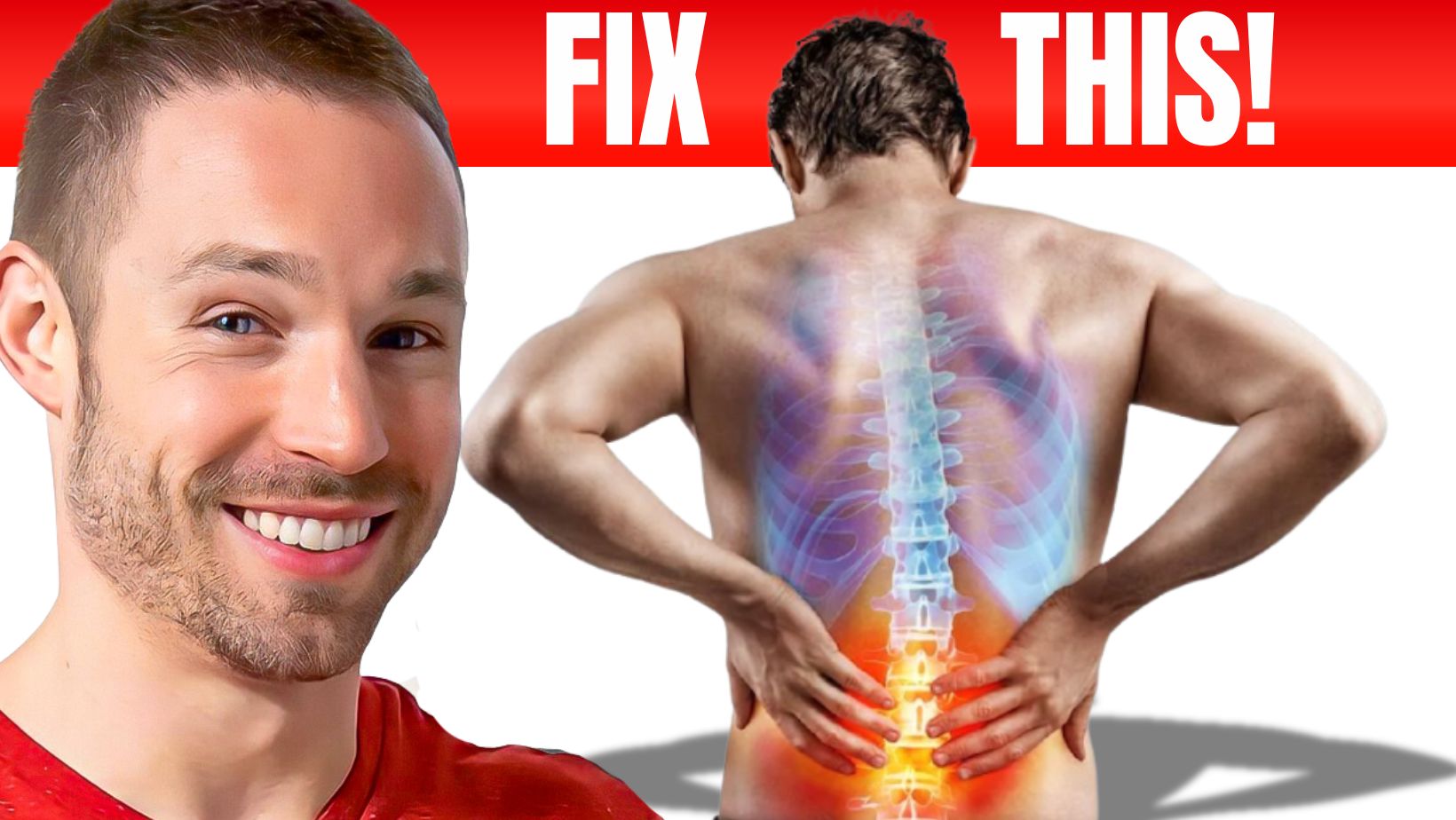
Today I’m going to give you a science backed 7-step process to fix your back pain, so you can get back to lifting, moving and living life without limits. The method you’ll learn is one I’ve learned personally from the world’s leading expert in spine biomechanics Dr. Stuart McGill and used successfully with hundreds of my own patients over the years to help them get out of pain.
- Identify movements & postures that cause
- Develop pain free replacement movements & postures
- Stabilize your torso
- Desensitize nerves if Sciatica is present
- Mobilize hips
- Learn to move about the hips
- Daily walking program
Now before we get into the tests and corrective exercises, we need to understand how you got here and developed an injury in the first place.
The Anatomy Of Back Pain
Your spine is biologically and architecturally different than every other joint in your entire body and therefore functions and operates under a different set of rules.
For example, your hip and shoulders are ball & socket joints – designed to create a lot of movement and power.

Your spine is not comprised of ball & socket joints but is instead 33 individual bones stacked on top of each other, each separated by a disc.

The disc has an outer section called the annulus, which is composed of multiple fibrous rings (similar to the layers of an union) that are connected and function like a strong fabric. Inside the annulus is a gel-like nucleus, which is pressurized to a high degree as you move and perform normal daily tasks.

Your discs allow the spine to act as a very flexible rod – giving us the ability to bend over and tie our shoes, twist to swing a golf club and perform the latest dance craze.
They also act like shock absorbers when carrying or moving loads.

Now our spine is at its strongest, and most resilient to injury when it assumes it’s natural curvature when lift weights with good posture called “neutral.” Research has consistently demonstrated a neutral spine spreads load evenly across the spinal structures, preventing excessive stress concentrations on any one part of the spine.

Now to keep our extremely flexible spine from buckling while lifting loads – all of the muscles that surround the spine act work together like a guy wire system to a radio tower to create stiffness and stability.
So while a good looking set of abs may look great in the mirror – the primary purpose of your core is to actually help you better control and STOP excessive spinal motion. Here’s an example
This person is lifting by moving about his hips while his back remains in a neutral position. This hip centric motion, called a hinge, decreases injury risk when lifting.

However, if he flexed his back while lifting, the spinal disc is bent – creating large posterior stresses on the inner nucleus.

If this poor lifting technique is repeated enough – the combination of compressive load and spine movement creates shearing loads on the disc that will eventually cause the ring like layers of the annulus to loosen (a process called delamination) – similar to how the fibers of your shirt would unravel and open up a bit if stressed back and forth enough. This creates a pathway for the pressurized nucleus to now push through – and this is how a disc bulge is eventually formed.

Now this is just one of many types of back pain that I see amongst my patients as a doctor of physical therapy every day in clinic and rest assured the exercises I show later in this video can very likely help you too – but only if you don’t skip this crucial step.
You see, the truth is that Most people would see dramatic improvements in their back pain recovery if they realized the way in which they were moving during their day was actually causing their symptoms!
Identify movements & postures that cause
Today I’m going to take you through 5 tests and screens to help you find the movements that are triggering your symptoms. Based on what we find I’ll then offer some ideas for ways to move during your day without pain.
To start, If your pain is worse with sitting slouched and pulling up on the underside of a chair or with bending movements and lifts like picking up objects from the ground or especially deadlifting – You’re pain can be categorized as a flexion intolerance – often due to a disc bulge or herniation.

If this sounds familiar, You need to learn how to avoid spine flexion with when sitting (by using some support for your low back) and with bending tasks by hinging about your hips.
The most simple way to learn how to hinge is with the short-stop squat. Push your hands into your thigh and simultaneously push your butt back as you slide your hands down to the top of your knees. The act of pressing your hands into your thigh creates sufficient core stiffness to help limit excessive spine bending – allowing you to move about your hips as you bend forward. Use this with everyday tasks like unloading your dishwasher and you’ll notice your pain starts to wind down.

If you need to pick up something heavier from the ground, use this short-stop squat and then drop your hips straight down – grab the object – stiffen your core and stand straight up. The same goes for reversing a heavy object back to the ground. Hinge at the hips, and then squat.
If you’re going to pick something very light off the ground, think about moving like a golfer picking up their ball – by kicking one leg back and hinging forward on one leg…you can also try kneeling. Both options will help concentrate movement about your hips while minimizing triggering spine flexion.
Now some with a flexion intolerance find benefit from lying on their stomach to relieve pain. If laying like this for 3 minutes reduces your symptoms when you stand back up, I’d recommend performing this a few times a day when you need relief.
If however, you find laying on your stomach, arching backwards or creating an anterior pelvic tilt causes pain – you may be dealing with an extension intolerance due to facet joint irritation or spondylolisthesis (an injury where one vertebra begins to slip forward on another).

Extension intolerances are common for gymnasts, cricket bowlers and those in the gym who over arch their low backs when performing certain lifts. In this situation, learning to maintain a braced neutral spine with the cue “ribs down” will help you avoid this pain trigger.
Next let’s see how you respond to dynamic loading such as running, jumping, or even the Olympic lifts. Raise on to your toes and drop down quickly onto your heels. You may feel a shockwave of load shoot up your body. Note if this created pain.
When you drop onto your heels like that, you create spine compression, but when someone has pain with this test, sometimes it’s because their vertebrae will slide a bit, unevenly loading the disc and the facet joints on the back side.
If this sounds like you, brace your core like this. Stick your fingers into the sides of your stomach. Then activate your abs in a way that push your fingers away. Then keep this stiffness engaged as you perform the test again. If your pain decreased – you just proved to yourself that enhanced core stability will be helpful for minimizing spine instability and helping reduce symptoms moving forward.
If your pain was however worse with bracing, you are likely dealing with a compressive injury to the thin layer of material that separates the disc and the vertebral bone called the end plate. We see this sometimes with powerlifters who don’t allow adequate rest between sessions to allow for appropriate adaptations. If this is you, it would be a good idea to take a big step back from lifting weights for a short time to let your body heal.

Next, try holding a light weight out in front of you at arms length while you take a few deep breaths in and out. If this sparks pain – try that abdominal bracing strategy again and see if that changes your symptoms. If your pain is reduced, you again proved that enhancing core stability will be helpful for controlling your pain and that you need to think about bracing your core in that same way when you do simple tasks during your day like picking up a cooler from the ground.

If however, your pain is still present – your injury is very load intolerant, and you need to consider postponing your lifting workouts at this moment and having someone else help you with daily lifting tasks until your back can further heal.
Last, if your pain is present when sneezing or rolling over in bed – you may be dealing with an instability. In this case – bracing strategies such as pushing into a counter top before sneezing or making sure you roll your body as one unit when turning over in bed will be key for preventing painful micro-movements.
It would also be wise to avoid chiropractic manipulation in this case as you already have too much motion at certain joints.
Now I cant stress how important it is to perform these kinds of tests when evaluating your back pain or any injury– that’s why I wrote my book rebuilding milo. It contains all of these tests and more to help you fix back pain along with other common injuries. Pick up your copy on Amazon.com.

Some of you may find your symptoms fall into more than one category. That’s not abnormal. In these situations, it’s key to try and maintain a neutral spinal posture during your day with hip hinging strategies to allow your symptoms can calm down.
Stabilize your torso
Our next step to fixing back pain is to enhance spine stability with the McGill Big 3 routine.
The modified curl up is the first exercise. Start by laying on your back with one knee bent and one leg relaxed on the ground. Have one hand under your back to support the spine. Take your other hand and push your fingers into your side. You’re going to first pre-brace your core by engaging your abs in a way that pushes your fingers to the side. THEN you will lift your head, neck and shoulders as one unit off the ground an inch or two.
Your focus of rotation will be your upper back – so don’t just flex your neck. As perform this small movement, you should NOT feel your low back flatten out into your hand. So think of your hands as pressure sensors – and keep your back in it’s neutral position with a slight arch. Hold this position for 10 seconds while you take small sips of air in and out before relaxing back down.
This will be followed by the side plank to address the sides of your core.
The most simple version is to lay on your side with your knees bent in front of you. Move into the side plank by “squatting your hips up.” maintain a neutral spine the entire time. As you hold this position for 10 seconds, keep your core tight and you should feel your downside abs and even your downside glutes helping keep your pelvis level. After 10 seconds, “squat your hips back down” to the ground to limit bending of your spine.
A progression would be going to the full side plank and you could even lift your top leg if you really want to work your core and your lateral glutes.
The last of the McGill Big 3 routine is the bird dog.
Start on your hands and knees with your back in a pain free position. Pre-brace your core slightly before lifting your opposing arm and leg off the ground an inch. Then without any spine movement – extend the arm and opposite leg. Make sure to keep your back leg close to the ground as lifting the leg too high could cause you to move your spine.
Making a fist with your extended hand can also help engage your body optimally as well. A helpful cue is to also think about pushing the floor away with your plant arm to help stabilize the torso. Take small breaths in and out for 10 seconds while keeping the core braced before sweeping your legs back to the start position. Then relax and repeat.
If this is too difficult – try performing the bird dog off a bench or chair. And if too easy – you could progress by drawing squares with your outstretched arm for the 10”.
As far as programming – Dr. Stuart McGill recommends starting with 5-6 reps of each exercise for 10” holds. If you would like a greater challenge – don’t increase the time of hold but add in more reps in a descending rep scheme pyramid like this.
Set 1: 6 reps x 10” holds
- Rest 20 seconds
Set 2: 4 reps x 10” holds
- Rest 20 seconds
Set 3: 2 reps x 10” holds
For most of my patients I recommend perform the McGill Big 3 every single day, especially before physical activity, as our goal is to build better stability endurance.
Another core stability exercise I find very helpful for many dealing with back pain is an offset walk.
To perform hang a light weight (such as a 10 lb plate) off a PVC pipe or broom stick. Stay as upright as possible while you take a few steps forward and back. I often start my patients out with 3-4 rounds before switching sides.

Research shows that many who develop low back pain often have a decreased ability to sense spinal position and movement. Basically they can’t tell if they’re in a good or bad position. The bouncing weight creates an unstable environment which activates small muscles deep next to your spine that sense the smallest position changes of the vertebrae bones – meaning this drill can enhance the body’s awareness of position and movement (also known as proprioception).
According to Dr. Andrew Lock who I learned this exercise from – these help “build a suit of armor from the inside out.”
Desensitize nerves if Sciatica is present
The next step in the rehab program will be for those who have sciatic like symptoms. If you have pain that radiate into your glutes, or even down your legs – try this.
The test to see if the sciatic nerve is at fault starts by sitting over the edge of a bed and extending one leg out front. Start with your pain free side. Flex your ankle and Pull your toes back towards your body before THEN bending your head forward. Now do the same thing on your painful side – If this recreates your radiating symptoms – you would likely benefit from nerve glides.

Sit tall with your hands behind you for support. Flex your neck down while at the same time bending your knee and pointing your toes down. Then do the reverse, extend the neck, kick your leg out and pull your toes back. This cycle should be nice and slow taking about 5 seconds and should not cause symptoms.
Start with 10 reps and if it doesn’t create symptoms, you can start doing them a few times a day but just not directly after waking up in the morning.
Mobilize hips
The next step in our complete back pain rehabilitation plan is to assess your hips and restore mobility and glute activation. Stiff hips, especially on one side, will lead to uneven forces placed on your low back.
But before jumping right into doing mobility exercises, I’m first going to show you 2 tests you can easily perform to see if you have problems in these areas.
If you test positive in any of these tests, I’ll then give you a home exercise program of mobility drills that focuses on mobilizing those tight structures to restore balance to your body and take load off your back.
The first is the FABER test which assesses both external rotation and extension. Lay on your back and place one foot on top of your opposite side knee. Then let your leg relax and drop as far to the ground as possible. Make sure to keep your pelvis level as rotating your hips will throw off the results of the test. If you have less range of motion on your painful side that would indicate a positive test.
For test number two we’re going to look at hip internal rotation. This test is best done with a friend so you can relax as the friend assesses how much you can rotate. However, if you’re by yourself – sit over the edge of a table or bed and rotate your foot out to the side as far as possible without your pelvis moving or torso shifting side to side. If you have less range of motion on your painful side that would indicate a positive test.
So now that we’ve run through the tests, it’s time to start your constructing your individualized mobility plan by restoring movement to restricted areas you found in the prior testing. But before we dive into the exercises – if you didn’t find any mobility restrictions, you can definitely skip over this section and move to the next step. But if you did find some tight areas – let’s dive in.
If you were limited in the FABER test, try the kettlebell weight shift. To perform, start in a kneeling position with your restricted hip up. Then open your hip by squeezing your glute before shifting until you feel a groin stretch. Try 5 reps for a 5” hold.
If you were limited with hip internal rotation, try the assisted hip airplane. Find something to hold onto before then assuming a single leg RDL position with your focus hip as the stance leg. Then drop your pelvis until you feel a stretch in the back of your hip in your glutes. Try 5 reps for a 5” hold.
Now if your limited hip internal rotation is also connected with a pinching pain in the front of your hip when you pull your knee to chest – you may want to try a joint mobilization instead. Place a monster band loop across your restricted hip and assume a lunge position. Holding onto a bench can help you get enough tension on the band without being pulled over. Then take a deep breath out and relax your hip while simultaneously pushing your knee across your body into hip internal rotation. At the same time drop your chest towards the ground. If you have enough tension on the band you won’t feel that prior hip pinch. Then open your hip while squeezing your glute and hold for 3”. Then reset and repeat this sequence 4 more times.
Once we’ve established more symmetrical hip mobility, we need to enhance glute activation as back pain often inhibits the glutes from firing optimally.
The Glute bridge is a great first step to achieving this. Lay on your back with your knees bent. Push your feet hard into the ground and lift your hips without overextending your low back. In the top position squeeze your glutes as hard as possible for 5.” If this motion brings out back pain, try pushing your elbows into the ground or behind you into a wall before you lift the hips – either of these tips can help enhance core stiffness to allow the motion to come primarily from the hips and you to feel your glutes working hard.
If you feel your hamstrings cramping, try pushing through your toes rather than your heels – doing so will help disengage the hamstrings and help most feel their glutes instead.
Learn to move about the hips
Last, we’re going to learn how to move about your hips by performing some squats. Here’s what I want you to do
Start with a proper brace by pushing your fingers into your stomach. Engage your abs in a way that pushes your fingers to the side. Make sure your feet are firmly gripping the ground and open your hips slightly to the side. Then you’re going to hinge by pushing your butt back and leaning your chest forward and then perform a squat. Only go as deep as you can without pain. At first this may just be to a chair or box before coming back up, but your goal is to keep your core braced and try to limit any spine motion as you move about your hips. Start with 10-20 reps every single day.
If this is easy and pain free after a few reps, you can add some weight but make sure your technique is pristine and completely pain free before adding more load.
Daily walking program
The last step that can help a lot of people with back pain is to begin an interval walking program. A general recommendation is to start with. 2-3 walks of 10-15 minutes a day.
Now if walking longer distances brings out pain, just go as far as you can without pain and then rest.
For example, if you could only walk for 5 minutes before pain sets in, start with 3 minutes every hour and over time you should notice you can go further and further without pain.
Make sure that you’re walking at a fast pace while swinging your arms to get the most benefit from this part of the program.
And to make sure your current workout and corrective exercise plan doesn’t include any bad exercises – make sure you go watch this video on the top 4 mistakes most people make when trying to fix their back pain! #2 is going to shock you.
Until next time,

Dr. Aaron Horschig, PT, DPT, CSCS, USAW

steal a brainrot is a very fun game. Looking forward to your arrival.
labubucreator is a great place where you can learn about labubu
Story Video AI
Story Video AI – Turn Your Stories into Videos, for Free
The all-in-one, completely free AI video creation platform. Instantly transform your text, stories, and scripts into professional-grade AI videos. Unleash your imagination, we’ll handle the rendering.
There are always a few good articles in a person’s life that light up your life. thank you !
he method you’ll learn is one I’ve learned personally from the world’s leading expert in spine biomechanics Dr. Stuart McGill and used successfully with hundreds of my own patients over the years to help them get out of pain.
Very insightful! For core strengthening, are there specific exercises you recommend that are most effective and safe? This is especially important for people who sit a lot. Eager for more details!
As a weightlifter, back pain is common. I deeply relate to the emphasis on posture and core stability in this article. Indeed, small details can prevent big problems. Highly recommended!
A guide packed with useful info! Every step is spot-on, unlike generic advice. Very helpful for anyone truly looking to fix their back pain.
Sounds good in theory, but it’s so hard to actually stick with it. Especially breaking bad habits. I wish the article would emphasize more on the mental aspect of consistently following these steps long-term.
Loving this site for free classics! Hypackelgames
Look, ankle mobility’s crucial—no one talks about it enough. Plus, if you’re struggling with those squats, you might wanna check out some resources here for extra tips. Steal a Brainrot
bokep jepang platform resmi fakultas farmasi nihon university indonesia untuk pengelolaan laporan, peninjauan data akademik, dan verifikasi hasil.
bokep jepang platform resmi fakultas farmasi nihon university indonesia untuk pengelolaan laporan, peninjauan data akademik, dan verifikasi hasil.
Haartransplantatie is een populaire cosmetische ingreep voor mensen die last hebben van haaruitval of kalende plekken. Tijdens een haartransplantatie worden haarzakjes van een donorgebied, meestal aan de achterkant van het hoofd, verplaatst naar de gebieden met haarverlies. Dankzij geavanceerde technieken zoals FUE en DHI zijn de resultaten tegenwoordig natuurlijk ogend en blijvend. Veel mensen kiezen ervoor om een haartransplantatie te ondergaan in het buitenland, bijvoorbeeld in Turkije, vanwege de hoge kwaliteit en betaalbare prijzen.
Activities that require caution with bones and joints geometry dash jump
It may sound good in theory, but it’s really difficult to follow through on it. In particular, getting rid of detrimental habits. It would be great if the article placed greater emphasis on the mental aspect of adhering to these steps consistently over the long term.
Back pain is such a common issue, and I found your 7 science-backed steps” really practical. Applying these strategies consistently can truly improve quality of life. It reminds me of how a critical thinking essay writing service also helps students build structured approaches to solving problems both require patience, strategy, and discipline.
In theory, it might sound fantastic, but in practice, it’s very challenging. Specifically, shedding harmful behaviors. If the essay focused more on the mental side of following these instructions consistently over time, it would be fantastic.
if you could only walk for 5 minutes before pain sets in, start with 3 minutes every hour and over time you should notice you can go further and further without painminecraft v1.17.200 apk with RTX support
This sounds super promising! I’m really intrigued by the mention of Dr. Stuart McGill and how his expertise is woven into these 7 steps. It’s also great that you’re going to explain *why* back pain happens, especially with the spine being so unique. Can’t wait to learn more!
This article is a comedy of errors! Who knew picking up a cooler could be so complicated? I especially love the part about bracing your core like youre about to be poked. Who has time for all this when you just want to sneeze in peace? And dont get me started on the sciatica test – its like a dare from your body to see how many ways it can tick you off. But hey, if it helps, Ill consider picking up my own copy of Rebuilding Milo and start my daily routine of looking like a confused seal. 🐻💪laser marking machine
Science-based rehab advice really empowers people to take action. For those wanting a mental challenge after physical ones, you could try Level Devil, a browser game with 16 demanding levels—it’s not a troll, just really fair and tough. The game’s design aligns with the “practice makes progress” philosophy seen here.
Enter the freezing world of Slope Rider, where accuracy and speed coexist. Every descent turns into an adrenaline-pumping adventure via shimmering peaks and expansive snowy terrain. As you navigate your sled along winding trails, avoid fallen branches, and respond quickly to unexpected obstacles that put your reflexes and control to the test at every turn, experience the excitement. Slope Rider
Love the focus on Dr. McGill’s methods – so crucial for back health! Can’t wait to dive into these steps and get back to pain-free movement. It’s like solving a puzzle, which reminds me, sometimes I relax with a fun little game like gamebol.
GB WhatsApp is a modified (unofficial) version of the original WhatsApp Messenger developed by independent developers. It offers a wide range of features not available in the official app, making it popular among users who want more control and customization over their messaging experience
Octordle is a popular and fun online puzzle game where players have to guess eight words at once. Each attempt reveals all the letters on the board. It’s a great way to exercise your brain and increase your vocabulary.
This article clearly explains how bodybuilding can be enhanced through smart supplement choices and structured training routines
This page how FitGuide isn’t only about size—it’s about strategy, recovery, and evidence-based supplement support
Like DixMax Mac keeps entertainment seamless, the disc’s annulus and nucleus work together smoothly, maintaining stability and flexibility, ensuring your body functions efficiently through everyday movements and pressure.
Dr. McGill’s methods are legendary! I’m really looking forward to these 7 steps to get back to living without limits. It just goes to show how important it is to address *all* aspects of our health, whether it’s physical pain or even knowing where to get autism test for a comprehensive understanding of well-being.
A truly insightful breakdown of spinal mechanics and posture! It’s fascinating how small movements can have such a big impact on our overall health. Just like maintaining spinal alignment ensures balance and support, digital systems such as Samagra ID help maintain balance and connection within governance and citizen services.
I checked https://pinupcrazytime.com/ out of curiosity and found it useful for understanding the basics of online live gaming. It’s well-written and stays neutral throughout.
This sounds incredibly helpful! I’ve been struggling with back pain for ages, so Dr. McGill’s methods sound promising. I’m really hoping to see my pain just start to Drop Away after trying these steps. Can’t wait to dive into the full article!
Great insights in this article on fixing back pain! The 7 science-backed steps are practical and effective for tackling the root causes. For anyone looking to get extra value, don’t forget to grab the top follow 1000 Coins code for some added perks.
This article is super helpful, especially with the focus on exercises that can really help alleviate back pain. It’s interesting how such structured routines can remind me of the precision needed in strategies like in PVZ Fusion Bahasa Indonesia APK—timing and the right moves make all the difference! Thanks for sharing these science-backed steps; I’ll be incorporating some of these into my routine to improve my back health.
I’ve been playing on Glory Casino Bangladesh https://glorycasinobangladesh.com/ for a while now, and honestly, it feels like one of the easiest and most comfortable platforms for everyday gaming. Everything works smoothly, the site loads fast, and deposits or withdrawals don’t cause any stress. There are plenty of games to choose from, so it never gets boring, and the interface is simple enough that even on my phone everything looks clear and easy to navigate. For me, Glory Casino Bangladesh has become a place where I can genuinely relax and enjoy the game without any hassle.
Very helpful guide! Torso stability and hip mobility tips also help during long APK sessions. I wrote a short guide for Shadow Fight 2 players with the same posture tips.
Wow, the step-by-step approach here is fantastic. The McGill Big 3 routine and glute activation drills are exactly what I needed. I even reward myself with a quick round of block blast online after finishing my sets — great for keeping morale high!
This article is a lifesaver for anyone dealing with chronic back pain. I love the way it explains core stability and spinal alignment so clearly. It reminds me how important a solid foundation is — whether for your back or even using a cement calculator for slab to get things right from the start.
This program is incredibly detailed and very science-based. I appreciate how it explains different types of back pain and how to move safely. When I take short breaks, I like playing unlimited wordle to keep my brain engaged while my back recovers.
This guide is incredibly thorough! I love how it breaks down spine mechanics and gives clear steps to protect your back while lifting. While I work through these exercises, I like to take a quick break and unwind with baseball bros game — it’s a fun way to keep my mind off the pain and stay motivated.
Wow, the step-by-step approach here is fantastic. The McGill Big 3 routine and glute activation drills are exactly what I needed. I even reward myself with a quick round of block blast online after finishing my sets — great for keeping morale high!
Great tips for back pain! It reminds me of how I need step-by-step guides for tricky tasks, like when I’m stuck on a pixel flow level in that puzzle game. Thanks for sharing this helpful approach!
I’ve been using WeDaf https://blog.wedaf.com/ for a while, and it’s such a nice way to talk to people globally. The app is simple to navigate, and chatting feels comfortable and fun, making it easy to connect with others.
I especially enjoy discovering friends with similar interests from different countries. The conversations are smooth, and the platform feels safe and welcoming. WeDaf really helps to bring people closer, no matter where they are in the world.
Choose the best IT consultancy in Dubai for reliable IT services designed to support every stage of your business. Our skilled IT consultants in Dubai deliver customized solutions in cloud services, digital transformation, security, and end-to-end support, ensuring seamless operations and sustainable growth.
Great science-backed protocol. It’s interesting how many solutions today, even for physical health, rely on digital tools for support and consistency. This makes me think of the broader ecosystem—like the prevalence of modified apps such as WA GB (GB WhatsApp) for those seeking more features. While they’re popular, it’s a reminder to prioritize secure, official channels, especially when dealing with sensitive things like client health data or communication. The discussion around tools like these (often found via portals like gbwhata.id) really highlights the balance between seeking functionality and maintaining security in our digital health toolkit.
This guide on fixing back pain is incredibly thorough and easy to follow! I love how you break down movements and postures scientifically. For a fun mental break after a long session of rehab exercises, I like playing block blast unblocked , it’s a surprisingly strategic puzzle game that keeps my mind sharp.
I appreciate the emphasis on hip mobility and core stabilization. It’s amazing how small adjustments can make a huge difference in back health. On a lighter note, when I want to relax and enjoy some casual competition, I jump into baseball bros unblocked—it’s simple, fun, and addictive!
1. Improve posture
Sit and stand straight, keep shoulders relaxed, and avoid slouching—especially while using a phone or laptop.
2. Stretch daily
Gentle stretches like knee-to-chest, cat-cow, and hamstring stretches reduce stiffness and improve flexibility.
3. Strengthen core muscles
Exercises such as planks and bridges support the spine and reduce pressure on your back.
4. Apply heat or cold
Cold packs reduce inflammation; heat relaxes tight muscles. Use for 15–20 minutes.
5. Stay active
Light walking or swimming keeps muscles loose. Avoid long bed rest—it can worsen pain.
6. Sleep smart
Use a supportive mattress and sleep on your side with a pillow between your knees. https://talegrammodx.com/
I’ve visited many websites looking for the perfect solution, but none has ever offered one as good as yours. I visited your website for the first time and was impressed after reading your amazing guide. Man, you’re great. Please keep up this hard work and keep publishing more informative articles like these. Thanks!